
Summary
Understanding the difference between a car collision vs car accident can affect how liability is evaluated in California personal injury claims. The terms influence how insurance companies assess fault, negligence, and compensation. This guide explains legal distinctions, proving fault, and the steps injured victims should take to protect their rights
Table of Contents
A sudden crash can change your life in seconds. But when it comes to a car collision vs a car accident, the words used to describe what happened can carry legal weight—especially in California personal injury law.
A “car accident” often suggests something unavoidable. A “car collision” points to impact, responsibility, and preventable conduct. That distinction matters when dealing with an insurance company, evaluating liability, and building strong insurance claims in serious accident cases.
Understanding how terminology affects fault and compensation can directly influence the outcome of your claim. Here’s why the difference matters more than you may think.
On Motor Vehicle Incidents
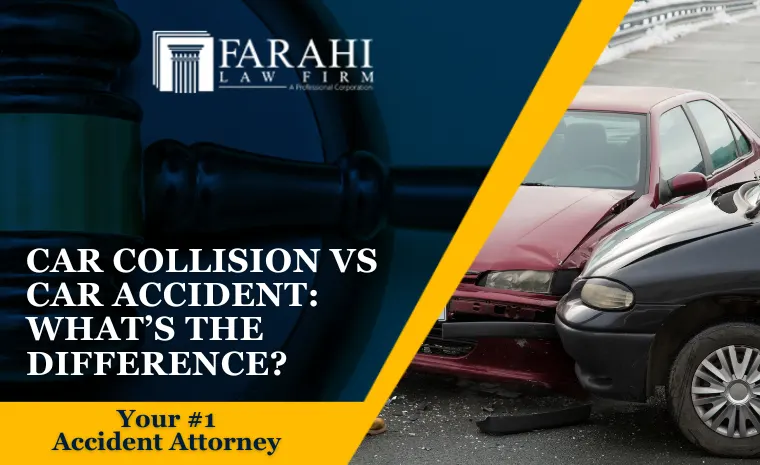
Motor vehicle incidents are often described as unavoidable events. In reality, many result from preventable behavior such as speeding, distraction, impairment, or failure to follow traffic laws. An auto accident or car crash rarely happens without a chain of decisions leading up to it.
Traffic safety data underscores the seriousness of these events. The Office of Disease Prevention and Health Promotion highlights that motor vehicle crashes are a major cause of unintentional injury deaths in the United States.
Beyond fatalities, thousands of Californians each year suffer serious harm, including spinal trauma, brain injuries, and other catastrophic injuries that require long-term care. From a legal perspective, these incidents are not simply misfortunes. When a driver fails to exercise reasonable care, California law allows injured individuals to pursue compensation.
Establishing fault is critical in auto insurance negotiations and personal injury claims. The way the event is framed—whether as a random accident or a preventable collision—can influence how responsibility is assessed and how insurers respond.
Car Collision vs Car Accident: What’s the Legal Difference?
In everyday conversation, people use these terms interchangeably. Legally, the distinction can influence how responsibility is framed in a claim.
A “car accident” suggests something unexpected or unavoidable. A “car collision” emphasizes impact and cause. In many vehicle accidents, the harm results from preventable conduct such as distracted driving, speeding, or impairment. That distinction matters when presenting your case to an insurance company or, if necessary, in court.
Here is a clear comparison:
|
Term |
Common Meaning |
Legal Implication |
Impact on a Claim |
|
Car Accident |
An unforeseen event |
May imply a lack of intent or randomness |
Insurers may frame it as unavoidable |
|
Car Collision |
A crash caused by the impact between vehicles or objects |
Suggests fault and preventable conduct |
Supports arguments for negligence and full compensation |
For example, in hit-and-run accidents, describing the event as a collision highlights deliberate wrongdoing. In cases involving reckless behavior, courts may even consider punitive damages if the conduct was especially harmful.
While terminology alone does not decide a case, language can shape how fault is evaluated. An experienced California car accident lawyer understands how to present the facts clearly and accurately. This is especially important when negotiating with an insurance company focused on limiting payouts.
Determining Liability in a California Car Crash
In California, most injury claims are based on a fault-based system. This means the person who caused the crash is financially responsible for the harm that follows. Establishing liability for a car accident is essential when seeking compensation for medical bills, lost income, and vehicle damage.
Under California Civil Code §1714, individuals are responsible for injuries caused by their failure to exercise ordinary care. In simple terms, drivers must act reasonably. If they fail to do so and someone is hurt, they may be legally accountable.
The Four Elements of Proving Fault
When proving fault in a car accident, four legal elements must be shown:
- Duty of Care: Every driver has a legal obligation to operate their vehicle safely and follow traffic laws.
- Breach of Duty: A breach of duty occurs when a driver violates that obligation, such as running a red light or texting while driving.
- Causation: The unsafe conduct must be directly linked to the crash and the resulting car accident injuries.
- Damages: The injured person must have measurable losses, including medical expenses, lost wages, or property damage.
Clear evidence of fault strengthens negotiations with auto insurers, who often look for reasons to reduce or deny claims. The stronger the liability case, the harder it becomes for an insurer to dispute responsibility.
If questions about car accident liability are unclear, consulting an experienced auto accident attorney can help protect your rights. An attorney can also ensure the facts are presented accurately from the start.
How Negligence Is Proven After a Motor Vehicle Collision
After a serious vehicle collision, proving fault requires more than simply stating what happened. In California, evidence must clearly show who acted carelessly and how that conduct caused harm. This process is central to establishing car accident liability, especially when dealing with resistant insurance providers.
Several forms of evidence help build a strong claim:
- Collision reports prepared by responding officers
- Witness statements from people who saw the crash
- Photographs of the vehicles and the scene
- Documentation of medical treatment linking injuries to the impact
- Repair estimates and proof of financial losses
These details matter in personal injury disputes, where insurers often question fault or the severity of harm. A thorough case evaluation helps identify what evidence is needed and how it should be presented to protect your rights and strengthen your claim.
The Steps You Take Now Matter
The difference between a car collision and a car accident may seem minor, but how your crash is described can influence how responsibility is evaluated. In California, liability affects everything—from coverage for medical care to compensation for vehicle repair and other losses.
You do not have to navigate the legal system alone. Our California car accident lawyer understands how vehicle accidents are investigated and how liability is established under California law.
Contact us today for a free consultation to review your case and protect your rights.
Frequently Asked Questions
While both terms are commonly used, how a crash is framed can influence discussions about fault. Insurance companies often focus on whether the event was preventable. Clear evidence and accurate descriptions can support your position when seeking compensation.
Key evidence may include police reports, witness accounts, photographs, and medical records. Documentation showing damage, treatment, and financial losses strengthens a claim and helps establish responsibility.
It is wise to speak with a lawyer as soon as possible after a crash, especially if injuries are involved or if fault is disputed. Early guidance can help protect your rights, preserve evidence, and ensure your claim is handled properly from the start.