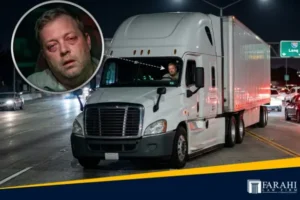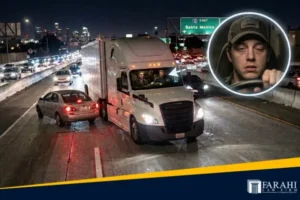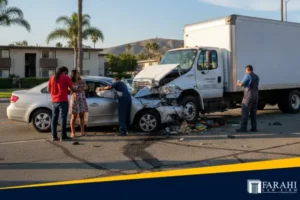

Intersections in Hawthorne, CA, can quickly turn dangerous when drivers fail to obey stop signs. Knowing how to prove fault in these disputes can determine whether you receive compensation for medical expenses, property damage, or lost wages.
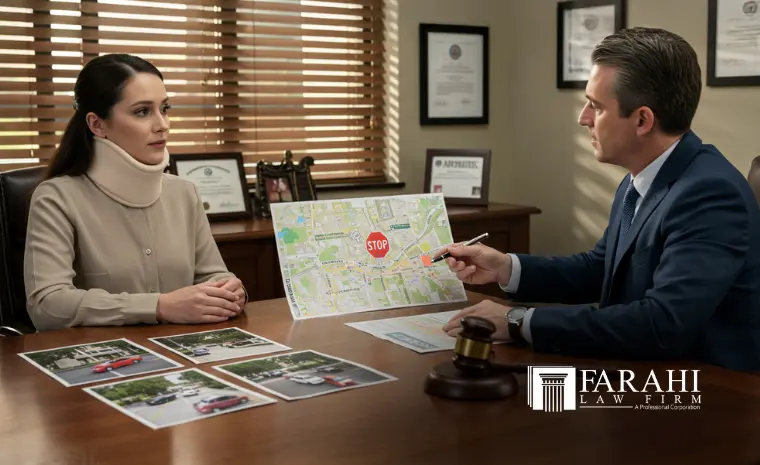
A case study shows that one-third of all intersection crashes and over 40% of fatal crashes occur at intersections controlled by stop signs. Understanding your legal options is crucial if you’re involved in a dispute. Let’s explore the scenarios, evidence, and legal strategies that can strengthen your case and protect your rights.
Common Stop Sign Dispute Scenarios
Stop sign disputes often arise in car accident cases where drivers argue over who had the right of way. Common examples include:
- Distracted driving that causes missed stop signs.
- Reckless driving where a motorist speeds through a stop sign.
- Failing to come to a complete stop before entering the intersection.
- Disagreements over local laws about yielding to cross traffic.
When a collision happens, the accident report from law enforcement can become a critical piece of evidence in resolving these disputes.
When Signs Are Missing, Damaged, or Obstructed
In Hawthorne, CA, intersections near landmarks like Hawthorne Boulevard or El Segundo Boulevard can experience high traffic. Missing, vandalized, or obstructed stop signs increase risks. Possible causes include:
- Vehicle malfunctions, like faulty brakes.
- Overgrown vegetation is blocking the sign.
- Construction zones with temporary signs that are unclear.
If the sign’s condition contributed to the accident, documenting it with photos of the accident scene and a police report is essential. This can support your personal injury or insurance claim against the responsible party.
Gathering Evidence to Prove Fault
A strong evidence package can make all the difference when figuring out how to prove fault. Key steps include:
- Collect official records – Medical records, accident report, and medical bills.
- Capture visual proof – Video surveillance footage from nearby businesses, dash cams, and witness accounts.
- Document damages – Property damage, damage to the vehicle, and any lost wages caused by the crash.
- Engage professionals – Reconstruction specialists can perform accident reconstruction to demonstrate the sequence of events.
The Role of Witnesses, Video, and Accident Reconstruction
Eyewitnesses can provide expert testimony about the driver’s actions. Combining their statements with video surveillance footage strengthens your position. In complex cases, reconstruction specialists analyze:
- Skid marks and debris patterns.
- Vehicle speed at the time of impact.
- Potential traffic violations or vehicle malfunctions.
This combination often sways insurance companies during car accident claims negotiations.
Importance of Hiring a Lawyer
The best car accident lawyer in Hawthorne can manage evidence, communicate with insurance companies, and protect your rights under local laws. A skilled personal injury attorney can:
- Evaluate the strength of your personal injury claim.
- Negotiate for medical expenses, lost wages, and fair settlement of car accident claims.
- Represent you in severe cases, including Wrongful Death claims.
- Provide personalized guidance tailored to your case.
If you’re wondering how to prove fault and deal with stop sign disputes, a knowledgeable car accident lawyer can help you avoid costly mistakes and improve your chances of a fair outcome.