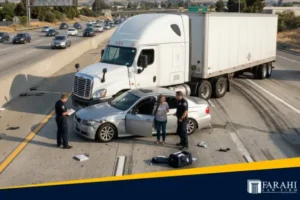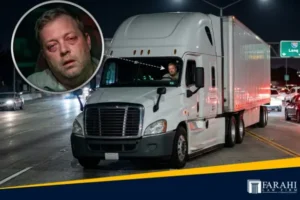

A serious truck crash on busy corridors like the Harbor Freeway (I-110) or Pacific Coast Highway near the Port of Los Angeles can leave victims with life-changing injuries and unanswered questions. One issue that often arises in these cases is whether hours-of-service violations played a role in the collision.
Federal safety rules limit how long a truck driver can operate a commercial motor vehicle without rest, because excessive driving time can lead to dangerous driver fatigue. When these rules are ignored, the consequences can be severe.
To understand how these violations can affect a truck accident claim in California, it helps to first look at the federal rules that regulate driver work hours.
What Are FMCSA Hours-of-Service Rules?
Truck drivers and trucking companies must follow regulations issued by the Federal Motor Carrier Safety Administration (FMCSA). These rules, known as Hours of Service, are designed to control how long drivers may work before taking rest breaks or rest periods.
Key limits for property-carrying truck drivers include:
Regulation | Key Requirement |
Maximum driving limit | Up to 11 hours of driving after 10 consecutive hours off duty |
14-hour work window | Driving must occur within a 14-hour shift after coming on duty |
30-minute break rule | Required after 8 cumulative hours of driving |
Weekly limit | No driving after 60/70 hours on duty in 7–8 days |
Rules differ slightly for passenger-carrying vehicles, which generally allow up to 10 hours of driving after 8 hours off duty.
Drivers must track their duty hours, including on-duty time, on-duty not driving, and off-duty periods. These records are stored electronically with an Electronic Logging Device (ELD) that monitors the vehicle’s location and operating hours.
Why Hours-of-Service Regulations Exist
Large commercial trucks can weigh more than 80,000 pounds, making them extremely dangerous when operated by an exhausted driver. That is why federal safety rules strictly regulate driving limits, rest requirements, and on-duty time.
Research on commercial trucking safety highlights the serious risks associated with fatigue.
A national safety study estimates that about 4,000 deaths occur each year in the United States due to truck and bus crashes. Researchers also estimate that driver fatigue might contribute to approximately 10% to 20% of these crashes.
These regulations exist to protect public safety by:
- Reducing driver fatigue during long-haul operations
- Limiting maximum driving time without adequate rest
- Requiring consistent rest periods and rest breaks
- Strengthening driver safety standards across trucking fleets
Common Ways Truck Drivers Violate Hours-of-Service Limits
Despite federal trucking regulations, hours-of-service violations still occur. Some violations are accidental, but others result from pressure to meet delivery schedules or increase profits.
Common violations include:
- Driving beyond allowed driving limits
- Failing to take mandatory rest periods or rest breaks
- Altering driver logs or falsifying the driver’s record of duty status
- Continuing to drive during an ELD Malfunction without proper documentation
- Exceeding the 14-hour work window without stopping
In some cases, drivers may also neglect required driver vehicle inspection reports, which can further indicate safety violations.
Pressure from California truck companies or unrealistic delivery deadlines can sometimes lead to unsafe practices. When that happens, responsibility may extend beyond the driver to the fleet management company.
How Hours-of-Service Violations Can Establish Negligence
In personal injury law, negligence occurs when someone fails to exercise reasonable care and causes harm.
When a truck driver disregards federal safety rules, those violations might help prove negligence in a lawsuit. Courts may consider whether:
- The driver exceeded permitted duty hours
- The driver skipped the required rest periods
- The trucking company failed to enforce hours of service compliance
If a driver continued operating a vehicle despite fatigue, plaintiffs may argue that this behavior directly contributed to the crash.
For example, imagine a driver traveling from Long Beach through I-110 near San Pedro after already working a full shift. If the driver exceeded the legal work window and then caused a collision near Cabrillo Beach or Harbor Boulevard, the violation could strengthen a negligence claim.
Evidence Used to Prove Hours-of-Service Violations
Truck accident investigations rely on several types of documentation and electronic records.
Attorneys and investigators often review:
- Electronic Logging Device data
- The driver’s ELD record showing driving and rest periods
- The driver’s duty status history
- Supporting documents such as fuel receipts and dispatch records
- GPS data verifying the vehicle’s location
- Records containing the driver’s license number and identification
- Company safety records maintained by fleet managers
These records help determine whether a driver exceeded legal limits before the crash.
Investigators may also examine whether the driver shut off the truck or recorded an engine-shutdown period consistent with rest requirements.
Why Trucking Companies Dispute Hours-of-Service Violations
Trucking companies often challenge allegations involving hours-of-service violations because liability can significantly affect insurance claims and settlements.
Companies may argue that:
- Data from the Electronic Logging Device is inaccurate
- The driver encountered adverse driving conditions that legally extended driving hours
- The driver complied with federal rules, but an unrelated factor caused the crash
Some companies also rely on flexible scheduling rules involving sleeper berth breaks. These rules allow drivers to split off-duty periods in certain ways to improve scheduling, but they can also complicate accident investigations.
How Violations Can Affect Compensation in a Truck Accident Claim
When fatigue-related violations are proven, they may strengthen an injury victim’s claim for compensation.
Evidence of safety violations may help demonstrate that a trucking company or driver failed to meet federal safety standards.
Potential damages in a truck accident claim may include:
- Medical expenses and ongoing treatment
- Lost wages or reduced earning capacity
- Property damage
- Pain and suffering
Because trucking cases often involve multiple parties—including drivers, employers, and insurance carriers—these cases can become legally complex.
A San Pedro truck accident lawyer may analyze logbooks, electronic records, and company policies to determine whether safety violations contributed to the crash.
Start Your Case Review With an Experienced Legal Team
Truck accidents often involve complicated federal safety regulations and extensive evidence. When hours-of-service violations contribute to a collision, they may reveal negligence by a driver, a trucking company, or both.
Victims who are injured may face medical bills, lost income, and lengthy recovery periods. The legal team at Farahi Law Firm – San Pedro understands how to investigate trucking cases and identify safety violations that may strengthen an injury claim.
If you or a loved one was injured in a truck crash, speaking with a San Pedro truck accident lawyer can help you evaluate your legal options. Contact us today for a free case review to discuss your situation and learn what steps you may be able to take next.