Overview
After a car accident in California, filing a police report is not enough. Drivers involved in accidents resulting in injury, death, or more than $1,000 in property damage must also file the SR-1 form with the DMV within 10 days. Failing to do so can result in license suspension and complications with insurance or personal injury claims.
Table of contents:
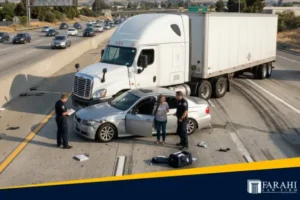
A car accident can turn your day upside down, whether it happens along Pacific Avenue, near the Vincent Thomas Bridge, on Gaffey Street, or by the Port of Los Angeles in San Pedro. In the immediate aftermath, you may feel overwhelmed and unsure what to do next. If you’ve already spoken to a police officer and they prepared an official accident report, you might assume your legal responsibilities are fully covered.
However, many California accident victims don’t realize they must still file an SR-1 form with the DMV. Failing to do so, even after police documentation, can lead to a suspended driver’s license and complications with insurance claims.
So what’s the difference between a police report and the California DMV SR-1 form? Let’s break it down and make sure your rights and driving privileges remain protected.
What Is SR-1 Form and Why Does It Matter?

California law requires drivers involved in certain traffic accidents to report the collision directly to the Department of Motor Vehicles (DMV) using the SR-1 Form. This requirement exists independently of any police report.
You must file an SR-1 within 10 days if the accident resulted in:
- Property damage exceeding $1,000
- Any bodily injury
- A fatality
This obligation applies to every involved driver or vehicle owner, regardless of who caused the accident.
Many drivers mistakenly assume that if police respond and file a report, their legal reporting duties are complete. They are not.
Do You Have to File an SR-1 After an Accident If the Police Came?
Yes. Even if the police officer came to the scene, filed an official police report, and gave you a copy, the vehicle owner or driver involved in a qualifying traffic accident must still file an SR-1 with the DMV.
Why This Matters
Failure to file within 10 days or filing an incomplete SR-1 can result in your driver’s license being suspended under Vehicle Code § 16004. The DMV does not provide grace periods or extensions, except in very limited circumstances (such as hospitalization that prevents timely filing).
Police Report vs. SR-1: What’s the Difference?
Although both documents relate to the same accident, they serve different purposes.
Requirement | Police Report | SR-1 Form |
Filed With | Law enforcement agency | California DMV |
Purpose | Documents scene, parties, and suspected fault | Reports the accident for DMV records |
Who Files It | Police officer | Driver or vehicle owner |
When Required | When police respond | Always when injury, death, or $1,000+ damage occurs |
Even if a police report was filed in San Pedro or elsewhere in California, you are still responsible for submitting Form SR-1 separately.
When Are You Legally Required to File an SR-1?
Under California Vehicle Code §16000, drivers involved in certain traffic accidents must report the collision to the DMV using Form SR-1 within 10 days of the incident. This deadline begins on the date of the accident — not when the police report becomes available or when insurance companies complete their investigations.
You are legally required to file an SR-1 if:
- You were driving or own a vehicle involved in the crash
- There was any injury, even if minor
- Property damage of $1,000 or more to any vehicle or other property
- Someone died as a result of the collision
While California Vehicle Code §20002 governs reporting duties related to property damage and hit-and-run incidents, Vehicle Code 16000 specifically establishes the DMV reporting requirement. These are separate legal obligations.
The DMV does not wait for insurance determinations or fault investigations. The filing requirement is automatic and applies regardless of who caused the accident.
Legal Risks of Not Filing the SR-1 Form
Failing to file an SR-1 after a qualifying accident can create serious legal and financial consequences that many drivers do not anticipate. The California DMV treats the SR-1 requirement as mandatory, separate from any police involvement. If the form is not submitted within 10 days, the DMV may suspend your driver’s license — even if you were not at fault for the crash.
A suspension can disrupt your ability to work, attend medical appointments, or manage daily responsibilities. Reinstating your license may require providing updated proof of insurance, resolving administrative holds, and addressing potential issues related to your vehicle registration status.
Beyond license suspension, failing to file the SR-1 can also affect your insurance negotiations. Insurance companies may argue that noncompliance with DMV reporting requirements weakens your credibility. This can result in delayed processing of claims, reduced settlement offers, or disputes regarding medical bills and property damage.
Many accident victims assume that visiting the hospital and cooperating with law enforcement is enough. Unfortunately, overlooking the SR-1 filing requirement can cost thousands of dollars in delayed or denied compensation — and create avoidable legal complications during an already stressful recovery period.
Insurance Verification Requirement
Filing the SR-1 triggers the DMV’s verification process under California’s Financial Responsibility Law (Vehicle Code §§ 16020-16029). The DMV will confirm that you had valid auto insurance at the time of the accident. If you cannot provide proof of insurance, your license may be suspended even if you filed the SR-1 on time.
This is separate from the SR-22 form (Certificate of Financial Responsibility), which may be required later if your license is suspended or you’re convicted of certain violations.
How Filing the SR-1 Impacts Your Personal Injury Claim
Filing the SR-1 form isn’t just about checking off a legal requirement; it’s a critical step in strengthening your accident claim.
Here’s how it helps:
- Creates an official record with the DMV
- Serves as additional evidence for your personal injury attorney
- Helps document a timely notice of injury, which is vital in claims for injuries
- Proves compliance with legal requirements, minimizing potential disputes
Important timing note: While the SR-1 must be filed within 10 days, you generally have two years from the date of the accident to file a personal injury lawsuit in California (CCP § 335.1). However, if a government entity is potentially liable (such as poor road conditions maintained by the City of San Pedro), you must file a government tort claim within six months (Gov. Code §§ 910-915). Early consultation with a personal injury lawyer ensures all deadlines are met.
To learn more, read our article on How to Fill Out the DMV SR-1 Form After an Auto Accident.
Steps to Take After a Traffic Accident in San Pedro
If you were involved in an accident on Pacific Avenue, the Vincent Thomas Bridge, Gaffey Street, or anywhere in San Pedro, take the following steps:
- Call 911 and request police assistance
2. Seek medical evaluation immediately
3. Collect insurance information and witness contacts
4. Take photographs of vehicle damage and injuries
5. File SR-1 form with the California DMV within 10 days
6. Consult a San Pedro car accident lawyer to protect your claim
Early action protects both your health and your legal rights.
Frequently Asked Questions About SR-1 Filing
Yes. California law requires every involved driver to submit the SR-1 form when an accident meets reporting thresholds, regardless of fault. Even if a police officer completed a traffic accident report, you must still file separately with the DMV to avoid penalties and protect your driving privileges.
No. A police accident report or traffic accident report documents scene findings and fault observations, but it does not satisfy DMV reporting requirements. The SR-1 form must still be submitted directly to the California DMV by the driver and vehicle owner (if different) within 10 days of the accident.
The SR-1 form requires specific accident details, including the date and location of the crash, insurance information, license plate numbers, and vehicle identification numbers (VINs) for all involved vehicles. Providing accurate information helps ensure compliance and supports any future insurance claims.
Yes. Failing to file the required SR-1 form may complicate or delay insurance claims, especially if insurers question compliance with California reporting laws. Proper filing demonstrates that you fulfilled your legal obligations and strengthens your credibility during claim negotiations.
If you were injured, consulting a personal injury lawyer is highly recommended. An attorney can ensure the SR-1 form is filed correctly, verify that your accident report aligns with DMV records, and help protect your rights while pursuing compensation for injuries and damages.
- SR-1 = Traffic Accident Report filed by drivers after qualifying accidents
- SR-22 = Certificate of Financial Responsibility filed by your insurance company to prove you carry required coverage, typically required after license suspension, DUI, or certain violations
These are separate forms with different purposes. Filing an SR-1 does not require an SR-22 unless your license is subsequently suspended.
Protect Your License and Your Claim
After a car accident, your focus should be on recovery — not navigating DMV technicalities or insurance disputes. But missing a required filing, such as the SR-1, can create unnecessary legal and financial complications.
Farahi Law Firm has helped accident victims throughout San Pedro and across California protect their driving privileges and pursue full compensation for medical bills, lost wages, property damage, and pain and suffering.
Our team understands the local roads, the insurance tactics used in auto accident claims, and the importance of timely compliance with California DMV requirements.
We offer free consultations, and you pay nothing unless we win your case.
If you were injured in a car accident in San Pedro, do not risk license suspension or insurance delays. Call (844) 824-2955 today to speak with a San Pedro car accident lawyer and get clear guidance on your next steps.
We will get you the medical treatment you need and the money you deserve.