
Overview
Car accident injuries can range from minor soreness to life-altering trauma. Prompt medical treatment is essential for protecting your health, preventing complications, and strengthening any legal claim. This guide explains the types of car accident treatments you may need and why early medical and legal action can significantly impact your recovery.
Table of Contents
Auto accidents are often sudden and disorienting. Even low-speed collisions can generate significant force on the body. The adrenaline released during a crash may temporarily mask pain, causing victims to underestimate their injuries.
Early medical evaluation helps to:
- Identify hidden internal injuries
- Prevent complications from untreated trauma
- Reduce long-term pain and mobility issues
- Create medical documentation necessary for insurance claims
Delaying treatment can worsen injuries and give insurance companies grounds to question the seriousness of your condition.
In this blog, we’ll delve into the types of car accident treatments you might need after a crash and why it’s essential to prioritize your health and well-being by seeking immediate help, both medical and legal.
Should I See a Car Accident Doctor After a Crash?
Yes. You should seek medical attention after any car accident, even if you feel “fine.”
Certain injuries, including whiplash, concussions, soft tissue damage, and internal bleeding, may take hours or days to become noticeable. A California car accident doctor can:
- Conduct a thorough physical examination
- Order diagnostic imaging
- Document injuries properly
- Develop a treatment plan tailored to your condition
Immediate documentation also strengthens any future personal injury or insurance claim.
Common Injuries That May Not Show Symptoms Immediately
Many accident victims delay care because symptoms are not immediately obvious. According to the California Highway Patrol’s Statewide Integrated Traffic Records System (SWITRS), California recorded approximately 155,878 injury crashes in 2022, resulting in over 221,000 people injured statewide.
Delayed-onset injuries may include:
- Whiplash and neck strain — Medical research confirms that whiplash can occur in collisions at speeds as low as 5–10 mph.
- Traumatic brain injuries (TBIs) — According to the NIH, TBI symptoms can emerge up to five weeks post-crash.
- Herniated or bulging discs — Disc injuries develop as inflammation and swelling worsen over time. Many victims feel only minor soreness initially, with severe pain and restricted movement appearing days or weeks later.
- Internal bleeding — Internal trauma to the liver, spleen, or kidneys may be asymptomatic initially, with symptoms such as abdominal pain, bloating, or changes in blood pressure only emerging later, making these among the most serious delayed injuries.
- Soft tissue damage — Muscle sprains, ligament tears, and back injuries commonly have delayed onset because swelling and tissue damage take time to develop. Insurance data shows neck sprains/strains are the most serious injury in approximately one-third of all injury claims from crashes.
- Spinal misalignment — Physicians routinely inquire about prior accidents when assessing back or neck pain due to the frequency of crash-related spinal injury.
Under California law (Civil Code §3333), accident victims injured by a negligent driver may recover compensation for medical expenses, lost wages, and pain and suffering. Victims generally have two years from the date of the accident to file a personal injury claim (California Code of Civil Procedure §335.1).
Note: Claims involving a government entity — such as a city vehicle or road defect — may require filing a government tort claim within six months under the California Government Claims Act.
Types of Car Accident Treatments You Might Need
After a motor vehicle accident, individuals often face a range of injuries, varying from minor bruises to severe trauma. Depending on the severity of the auto accident injuries and their consequences, various types of car accident treatments may be necessary to aid in recovery and improve overall well-being.
Medical Treatment
Medical treatment after a car accident can encompass a wide range of interventions:
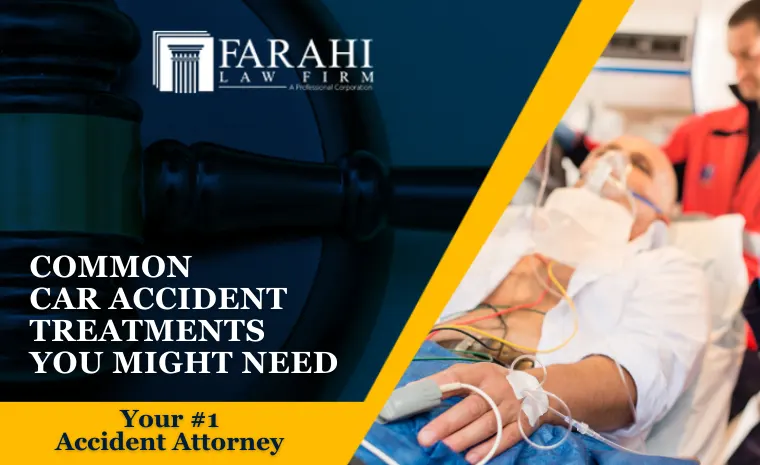
- Emergency Care: Immediately after a car accident, emergency medical care may be necessary to assess and stabilize any life-threatening injuries. This may include paramedic stabilization, trauma evaluation at a hospital, and surgery for internal injuries or fractures.
- Diagnostic Tests: To accurately diagnose injuries, medical professionals may order X-rays, CT scans, or MRIs. These tests help identify fractures, internal injuries, and soft tissue damage.
- Pain Management: Pain management is crucial for alleviating discomfort and improving the patient’s quality of life. This may involve over-the-counter pain relievers, prescription medications, or injections to target specific areas of pain, such as spine injections that may be recommended to alleviate discomfort and facilitate healing.
- Surgical Intervention: In cases of severe injuries, surgery may be necessary to repair damaged tissues, bones, nerves, or organs.
- Burn care: Crucial for individuals who have sustained burns from fire or hot surfaces during an accident.
Physiotherapy
Physiotherapy plays a significant role in rehabilitation following a car accident. This type of treatment focuses on restoring movement, strength, and function to affected areas of the body. It is particularly important for:
- Whiplash injuries
- Back and neck trauma
- Post-surgical rehabilitation
Through exercises, manual therapy, and other techniques, physiotherapists help individuals regain mobility, reduce pain, and prevent further complications.
Chiropractic Care
Chiropractors use hands-on spinal manipulation and other alternative treatments to align the body’s musculoskeletal structure, alleviate pain, and improve overall function. This form of therapy can be particularly beneficial for those experiencing back or neck pain due to whiplash or spinal misalignment.
Neurological Treatment
In cases where car accidents result in traumatic brain injuries or other neurological complications, specialized neurological treatment may be necessary. Neurologists and neurosurgeons work to assess and manage brain injuries, nerve damage, and other neurological conditions resulting from the accident. Treatment may include:
- Brain imaging
- Cognitive therapy
- Medication management
- Long-term monitoring
Medication Management
Medication management is often a crucial component of post-accident treatment, especially for managing pain, inflammation, and other symptoms. Depending on the individual’s injuries and medical history, doctors may prescribe pain relievers, anti-inflammatory drugs, muscle relaxants, or other medications to alleviate discomfort and promote healing. It’s essential for individuals to follow their healthcare provider’s instructions carefully and report any adverse effects or concerns promptly.
Psychological Therapy
Car accidents can have significant psychological repercussions, including post-traumatic stress disorder (PTSD), anxiety, depression, and other mental health issues.
Psychological therapy, such as counseling or cognitive-behavioral therapy (CBT), can help individuals cope with emotional trauma, process their experiences, and develop effective coping strategies.
Why Medical Documentation Is Crucial for Your Injury Claim
Medical records are one of the most important forms of evidence in a car accident claim. Insurance companies evaluate:
- Timing of treatment
- Consistency of medical visits
- Diagnostic findings
- Physician opinions
Gaps in treatment or delayed care can reduce the value of your claim. Early and consistent treatment demonstrates the seriousness of your injuries.
The Importance of Getting Legal Assistance
After a car accident, insurance companies often attempt to minimize payouts. Our award-winning California car accident lawyers can help:
- Connect you with qualified medical providers
- Ensure your injuries are properly documented
- Handle communications with insurance adjusters
- Calculate full damages, including future medical costs
- Negotiate a fair settlement or pursue litigation
We work closely with medical professionals who specialize in treating auto accident injuries. Our team ensures that your care and your legal case move forward together, so you can focus on recovery while we focus on maximizing your compensation.
Frequently Asked Questions (FAQs)
You should seek medical attention immediately, preferably within 24 hours of the accident. Even if injuries seem minor, early evaluation helps detect internal injuries, soft tissue damage, or concussions that may not show symptoms right away. Prompt medical care protects your health and creates documentation that can support your insurance or personal injury claim later.
It is common for accident victims not to feel pain immediately due to adrenaline masking symptoms. Injuries such as whiplash, internal bleeding, or traumatic brain injuries may take hours or days to develop noticeable symptoms. A medical evaluation ensures hidden injuries are identified early and properly documented before complications worsen.
Yes, you generally have the right to choose your own healthcare provider after a car accident. However, working with doctors experienced in treating accident-related injuries can improve diagnosis accuracy, treatment planning, and medical documentation. Proper records are essential if you later pursue compensation for medical expenses or other damages.
Insurance coverage depends on the type of policy involved, liability determination, and available coverage limits. Medical payments coverage, health insurance, or the at-fault driver’s policy may apply. An attorney can help evaluate available insurance benefits and ensure medical bills are properly submitted and pursued through the appropriate channels.
Physical therapy is often necessary for soft tissue injuries, spinal trauma, and joint damage caused by auto accidents. Structured rehabilitation helps restore mobility, strengthen muscles, reduce inflammation, and prevent long-term complications. Skipping recommended therapy may prolong recovery and give insurers grounds to question the seriousness of your injuries.
Yes. Psychological treatment for conditions such as post-traumatic stress disorder (PTSD), anxiety, depression, or emotional trauma may be included in a personal injury claim if properly documented. Mental health care is a legitimate component of accident recovery, especially when emotional distress affects daily functioning and overall well-being.
Get Help Protecting Your Health and Your Claim
Your recovery should be your top priority after a car accident — but protecting your legal rights is just as important. Even seemingly minor injuries can develop into chronic conditions that require ongoing treatment, rehabilitation, or specialized care. At the same time, insurance companies often begin evaluating your claim immediately, looking for ways to reduce what they pay.
Farahi Law Firm has helped car accident victims throughout California recover compensation for medical treatment, hospital bills, physical therapy, lost wages, reduced earning capacity, and long-term care needs. Our California car accident attorneys understand how insurers assess injury claims, and we work to ensure that your injuries, treatment plan, and future medical costs are fully documented and properly valued.
We coordinate with experienced medical providers who treat auto accident injuries and help ensure your medical records accurately reflect the severity of your condition. While you focus on healing, we handle insurance negotiations, gather evidence, calculate damages, and build a strong claim designed to maximize your compensation.
You pay nothing unless we win. Our firm works on a contingency fee basis, meaning there are no upfront legal fees and no financial risk to you.
If you were injured in a car accident anywhere in California, do not wait to protect your rights. Call (844) 824-2955 today for a free consultation with a California car accident attorney.
Let us review your case, explain your options, and fight for the compensation you deserve while you focus on recovery.