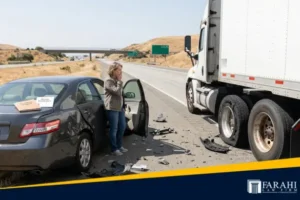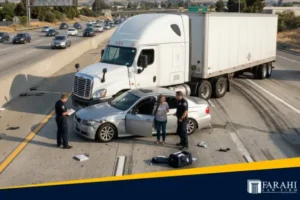

Commercial trucks play a vital role in moving goods across the state, but they also pose serious risks when safety rules are ignored.
California-specific trucking laws are designed to regulate how commercial vehicles operate on the road, often going beyond federal regulations to improve safety. These laws cover driver conduct, vehicle weight limits, safety inspections, and testing requirements for truck drivers.
Because California highways see heavy freight traffic every day, understanding how California-specific trucking laws work can help accident victims determine liability and protect their legal rights after a collision involving a commercial truck.
California Vehicle Code Requirements
One of the key areas where California-specific trucking laws differ from federal standards is through the California Vehicle Code. The state sets additional safety and operational requirements for commercial vehicles operating within California.
These regulations address issues such as:
- Driver licensing and endorsements
- Vehicle maintenance standards
- Hours-of-service compliance for intrastate drivers
- Commercial vehicle registration and operation rules
These state requirements help ensure that trucking companies and drivers meet strict safety standards before operating on California roadways.
Weight Restrictions
California also imposes specific weight restrictions for commercial trucks traveling on state highways. While federal rules establish general limits, California enforces additional standards designed to protect road infrastructure and reduce accident risks.
Common regulations include:
Regulation | Purpose |
Maximum gross vehicle weight limits | Prevent roadway damage |
Axle weight limits | Improve vehicle stability |
Load distribution requirements | Reduce rollover risks |
Violating these limits can increase the likelihood of serious crashes, especially when overloaded trucks struggle to brake or maneuver safely.
Intrastate vs. Interstate Trucking
Another key distinction within California-specific trucking laws involves the difference between intrastate and interstate trucking operations. These two categories determine which federal laws and state laws apply to commercial drivers and trucking companies.
Type of Trucking | Description | Regulations |
Intrastate Trucking | Freight is transported only within California | Primarily governed by state laws and the California Vehicle Code |
Interstate Trucking | Freight is transported across state lines | Regulated mainly by federal laws through the Federal Motor Carrier Safety Administration (FMCSA) |
While interstate trucking follows national safety rules, California still enforces additional state laws that may apply to commercial vehicles traveling through the state. These overlapping regulations can complicate accident investigations when determining liability after a crash.
In many cases, attorneys must analyze both federal laws and California regulations to determine whether safety violations contributed to the accident.
California Driver’s License Requirements in the Trucking Industry
Operating a commercial truck in California requires specialized licensing and strict compliance with trucking regulations. Drivers must obtain a Commercial Driver’s License (CDL) issued by the California Department of Motor Vehicles (DMV) before legally operating large commercial vehicles.
The CDL process involves multiple requirements, including:
- Passing written knowledge tests on commercial driving safety
- Completing road and skills examinations
- Meeting medical fitness standards
- Obtaining proper endorsements for specialized vehicles or cargo
For example, drivers transporting hazardous materials, operating tanker trucks, or driving combination vehicles must obtain additional CDL endorsements.
These licensing requirements are part of California-specific trucking laws designed to ensure that only trained and qualified drivers operate heavy commercial vehicles on busy roads such as Highway 99, Interstate 5, and State Route 198, where freight traffic is common in Central California.
When trucking companies allow unqualified or improperly licensed drivers to operate commercial vehicles, it may constitute negligence. In personal injury cases, reviewing driver licensing records is often an important step in determining liability after a truck accident.
Drug and Alcohol Testing Standards
Truck drivers operating in California must follow strict drug and alcohol testing policies. These rules apply to both interstate and intrastate commercial drivers and include testing in several circumstances:
- Pre-employment screening
- Random testing during employment
- Post-accident testing
- Reasonable suspicion testing
These requirements are designed to reduce impaired driving incidents involving large commercial vehicles. When trucking companies fail to comply with testing standards, they may face significant legal liability after a crash.
California Highway Patrol Enforcement
The California Highway Patrol (CHP) plays a major role in enforcing trucking safety laws throughout the state. CHP officers monitor commercial vehicles for violations such as:
- Hours-of-service violations
- Improper vehicle maintenance
- Overloaded cargo
- Unsafe driving behavior
Their inspections and accident investigations often provide key evidence in personal injury cases involving commercial trucks.
State-Level Safety Inspections
California requires commercial vehicles to undergo regular safety inspections that may exceed federal minimum standards. These inspections evaluate essential components such as:
- Brake systems
- Tire condition
- Lighting and signaling equipment
- Steering and suspension systems
Failure to maintain a truck in accordance with these requirements can directly contribute to serious accidents.
How a Truck Accident Lawyer Helps Maximize Compensation
Truck accident cases are often far more complicated than a typical auto accident because they may involve multiple liable parties, including trucking companies, drivers, vehicle manufacturers, and insurers. A knowledgeable Visalia truck accident attorney understands how to investigate these complex situations and determine whether violations of California-specific trucking laws contributed to the crash.
Experienced personal injury lawyers examine driver records, inspection reports, cargo loading procedures, and company safety policies to uncover evidence of negligence. They also assess the full scope of damages a victim may face, including:
- Medical expenses (e.g., surgery, diagnostic tests, physical therapy)
- Lost income (including reduced earning capacity)
- Emotional distress (such as pain and suffering)
- Property damage resulting from the collision
In addition to gathering evidence, an attorney handles negotiations with insurance companies that may attempt to minimize payouts. By presenting clear documentation and expert analysis, a lawyer can strengthen a claim and pursue the compensation victims deserve.
Most importantly, many injury attorneys handle truck accident cases on a contingency fee basis. This means clients typically pay no upfront legal fees, and the lawyer is paid only if compensation is successfully recovered. This arrangement allows accident victims to focus on recovery while their legal team works to secure the maximum possible settlement or verdict.