Summary
After a serious truck crash, regulatory violations often become the key to proving negligence. Federal FMCSA rules and California trucking regulations create enforceable safety duties. When those duties are ignored, liability strengthens and compensation exposure increases. Early legal action helps preserve black-box data and critical evidence before they disappear.
Table of contents:
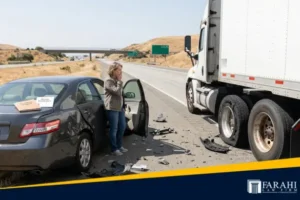
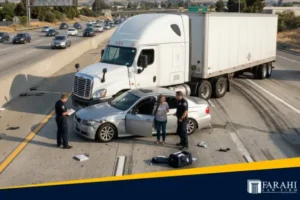
You’re driving home on a busy California highway when a semi-truck suddenly drifts into your lane. In seconds, the impact of an 18-wheeler changes everything—sirens, shattered glass, and a hospital room replacing your evening plans. As the shock fades, one question becomes urgent: could this crash have been prevented?
Behind many serious truck accidents are violations of CA trucking regulations—rules designed to control driver fatigue, cargo loading, maintenance, and safety standards for commercial vehicles. When those rules are ignored, the consequences are often catastrophic. In this guide, you’ll learn which regulations apply, how violations establish negligence, and how they can directly influence the compensation available in truck accident claims.
What Are the Regulatory Trucking Regulations In California

Behind many serious truck accidents, there are violations of CA trucking regulations—rules designed to control driver fatigue, cargo loading, maintenance, and safety standards for commercial vehicles. When those rules are ignored, the consequences are often catastrophic.
But here’s what most accident victims don’t realize: these regulations can directly determine whether you recover full compensation or face a denied insurance claim.
Safety violations are not technical details. They can:
- Establish negligence
- Expand liability to trucking companies
- Trigger access to broader categories of damages
- Require immediate preservation of critical evidence
In serious truck accident cases, understanding how these regulations apply can dramatically affect the strength and value of your claim.
Why Trucking Regulations Matter in Commercial Truck Accident Claims
Commercial trucks can weigh up to 80,000 pounds, making collisions on California highways especially dangerous. According to the National Highway Traffic Safety Administration (NHTSA), large trucks are involved in thousands of catastrophic injuries and fatal crashes each year.
That’s why California trucking regulations create strict legal duties for drivers and trucking companies. These rules cover:
- Driver fatigue (Hours-of-Service limits)
- Brake failure and vehicle maintenance
- Cargo loading and securement
- Blind spots and unsafe lane changes
When a truck driver or trucking company violates these safety standards, it may constitute negligence under California personal injury law. In truck accident claims, proving a regulatory violation can significantly strengthen liability and increase recoverable damages.
Key Federal Safety Rules That Frequently Impact Injury Cases
Federal motor carrier safety regulations set nationwide standards, but CA trucking regulations often work alongside those federal rules in serious truck accident cases. When violations occur, they can directly strengthen negligence claims under California law.
Federal Regulation | Requirement | Common Violation | California Parallel |
49 CFR § 395 | Hours-of-Service limits | Driver fatigue, falsified logs | Vehicle Code § 34501.12 |
49 CFR § 396 | Vehicle maintenance & inspection | Brake failure, defective equipment | Vehicle Code § 34501 |
49 CFR § 393 | Cargo securement standards | Unsecured loads, shifting cargo | Vehicle Code § 35655 |
49 CFR § 383 | Commercial driver licensing | Unqualified or improperly licensed drivers | Vehicle Code § 12523 |
49 CFR § 382 | Drug & alcohol testing | Impaired driving | Vehicle Code § 34520 |
In many cases, violations of FMCSA standards combined with California trucking regulations create layered liability—especially in commercial truck accident claims involving severe injuries.
California Trucking Regulations That Go Beyond Federal Law
Federal standards are only part of the picture. California trucking regulations often impose stricter operational and safety requirements on carriers operating within the state.
Key California-specific oversight includes:
- California Vehicle Code rules on weight limits, equipment, and roadway use
- California Highway Patrol (CHP) inspections and compliance enforcement
- Additional requirements for intrastate commercial vehicles
In freight-heavy regions like Los Angeles, Southern California, and Bakersfield, where commercial traffic moves daily along major California highways, these state-level regulations can significantly expand liability after a truck accident.
When federal and California rules overlap, violations may strengthen negligence claims and increase potential damages.
Federal vs. California Rules: Which Laws Apply to Your Truck Accident?
Determining which standards govern your crash depends on how the carrier operates under CA trucking regulations and federal law:
- Interstate trucking → Federal baseline under FMCSA regulations
- Intrastate carriers → Additional California trucking regulations may apply
- Mixed operations → Both federal and California rules can overlap
Because regulatory layers directly affect liability and damages, speaking with a truck accident lawyer in California can help clarify which laws strengthen your specific claim.
How Safety Violations Establish Negligence After a Truck Accident
Violating CA trucking regulations can legally establish negligence after a truck accident. When commercial drivers or trucking companies fail to comply with required safety standards, they breach a duty designed to protect motorists on California highways.
Under California law, these regulatory standards are not optional. They create enforceable obligations.
Negligence is typically proven through:
- Police reports documenting violations
- Witness statements confirming unsafe driving
- Black box data and driver logs
- Accident reconstruction expert analysis
When this evidence reveals driver fatigue, maintenance failures, or cargo violations, liability becomes significantly stronger in truck accident cases—often increasing settlement leverage and potential damages.
Moreover, violations of safety regulations can establish negligence per se (Evidence Code § 669). This means when a truck driver or company violates a safety statute designed to protect the public, and that violation causes injury, the violation itself may establish the breach of duty element of negligence—shifting the burden and strengthening your case significantly.
How Regulatory Violations Can Increase Compensation
When violations of CA trucking regulations are proven, they can significantly increase the value of a truck accident claim. Safety breaches strengthen liability, which often expands the scope of recoverable damages.
Economic damages may include:
- Medical expenses and ongoing treatment costs
- Lost wages and reduced earning capacity
- Property damage to your vehicle
Non-economic damages may include:
- Pain and suffering
- Diminished quality of life
- Loss of consortium
In extreme cases involving reckless misconduct—such as falsified driver logs or intentional safety violations—punitive damages may also be pursued under California law.
Why Trucking Companies and Insurance Companies Dispute Violations
Even when violations of CA trucking regulations are identified, trucking companies and insurance companies rarely accept responsibility without resistance. Their defense strategies often include:
- Denying causation between the violation and the crash
- Alleging comparative negligence against the injured driver
- Minimizing severe injuries or long-term impact
- Challenging medical documentation and treatment necessity
Because commercial truck accident cases involve layered regulations and aggressive defense tactics, a strong litigation strategy is essential to protect liability findings and maximize recoverable damages.
The Importance of a Truck Accident Lawyer in California
Proving violations of CA trucking regulations requires fast, strategic action. An experienced truck accident lawyer in California can:
- Preserve black box data and driver logs before they disappear
- Secure maintenance records and inspection reports
- Work with accident reconstruction experts to establish liability
- Negotiate aggressively with insurance companies
In high-stakes injury-damage cases involving commercial trucks, experienced truck accident attorneys understand how regulatory violations translate into stronger claims and greater compensation exposure.
FAQs
You may still pursue a trucking accident claim using witness statements, photos, medical records, and Black box data from the semi-truck or other commercial vehicles.
Most personal injury claims must be filed within two years from the date of injury (CCP § 335.1).
CRITICAL EXCEPTION: If a government entity is potentially liable—such as the California Department of Transportation (Caltrans) for dangerous road conditions, or if a government-owned vehicle was involved—you must file a government tort claim within six months under the California Tort Claims Act (Gov. Code §§ 910-915). Missing this deadline can permanently bar your claim against government entities.
Driver logs, maintenance logs, cargo loading records, and accident reconstruction analysis often prove negligence in truck accident cases.
Yes. Under comparative negligence rules, accident victims may still recover reduced damages based on their percentage of fault.
Protect Your Rights After a Truck Accident
Trucking companies and insurance carriers aggressively defend violations of CA trucking regulations. At Farahi Law Firm, we investigate federal compliance failures, analyze black box data, and build cases designed for maximum leverage in truck accident litigation.
Free consultation with our expert personal injury lawyers and learn how we can protect your claim.
The Medical Treatment You Need and the Money You Deserve.