SUMMARY
After a pedestrian accident in Bakersfield, fault isn’t always clear. California law protects pedestrians, even at unmarked intersections—but shared responsibility may reduce your compensation. Understanding your rights, collecting evidence, and working with a top-rated lawyer is key to securing the maximum recovery.
Table of Contents
You’re walking near South Union Avenue or crossing Stockdale Highway on a sunny afternoon—heading to the store, work, or maybe just enjoying a walk. Then it happens. In a split second, a car comes out of nowhere and hits you. No time to react. No time to protect yourself.
After a pedestrian accident in Bakersfield, the pain isn’t just in your body—it’s in the fear that follows. Fear of mounting medical bills, fear of not being able to work or walk like before, and fear of being blamed when you were simply crossing the street. Between hospital visits and insurance company pressure, feeling lost and powerless is easy.
Let’s break down how fault is determined, what you can do to protect your health, and how our top-rated pedestrian accident lawyer in Bakersfield can guide you through your legal options and protect your right to recover.
Who Has the Right of Way? Understanding California Pedestrian Laws
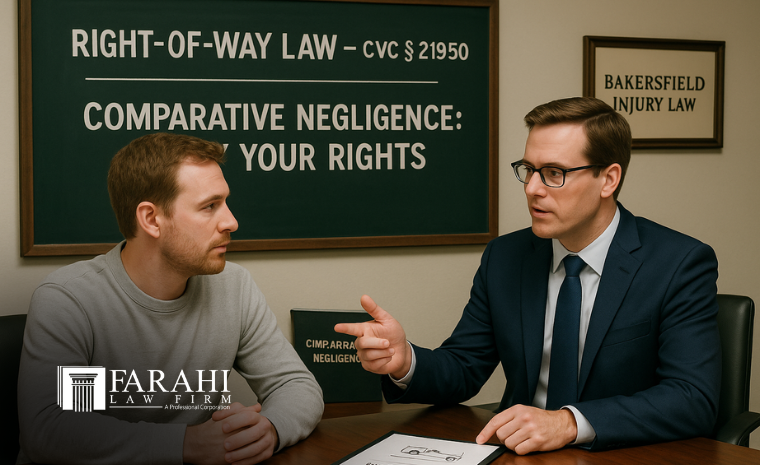
In most cases, pedestrians have the right of way in California—but that doesn’t always mean the driver is automatically at fault. After a pedestrian accident in Bakersfield, the key question becomes: Who violated the road rules?
According to California Vehicle Code §21950, drivers must yield to pedestrians at marked and unmarked crosswalks. That includes many intersections without visible paint—something most people don’t realize. However, the law also requires pedestrians to act responsibly and avoid suddenly leaving the curb or walking into the path of an oncoming vehicle.
But what about gray areas like jaywalking or crossing outside intersections? These situations can complicate fault, especially when insurance companies look to reduce or deny liability.
Here’s a quick comparison to help clarify:
Legal Code | What the Law Says | Example |
Drivers must yield to pedestrians in crosswalks. | A pedestrian walking across Stockdale Highway at a green light. | |
Pedestrians must not step into traffic suddenly. | Someone is darting across South Union Avenue mid-block. | |
Pedestrians outside a crosswalk must yield to traffic. | Jaywalking across Niles Street. |
Source: California DMV – Pedestrian Rights & Responsibilities
Who’s at Fault? Driver vs Pedestrian Scenarios in Bakersfield
Fault in pedestrian collisions in Bakersfield depends on the specific actions of the driver and the pedestrian. While motorists are legally obliged to yield and exercise caution, pedestrians must also follow traffic signals and use crosswalks when available.
Common Driver Fault Patterns:
- Speeding or aggressive driving
- Failure to yield at crosswalks or intersections
- Distracted driving (e.g., texting or eating behind the wheel)
- Running red lights or stop signs
Common Pedestrian Fault Patterns:
- Walking against traffic signals
- Jaywalking or crossing mid-block
- Entering the street suddenly from behind parked vehicles
Let’s compare two brief scenarios:
- Pedestrian at Fault: A pedestrian crosses mid-block between parked cars. Although the driver is moving cautiously, poor visibility makes stopping impossible. The pedestrian’s failure to use a crosswalk and sudden entry into traffic may place them at fault.
- Driver at Fault: A pedestrian begins crossing at an unmarked intersection. The driver, distracted and inattentive, doesn’t yield and hits them. Even without marked lines, the law protects pedestrians in such crossings, making the driver potentially liable.
Understanding how California law interprets these actions is crucial for any personal injury claim following a pedestrian accident.
Shared Fault: How Comparative Negligence Affects Your Claim
Even if you were partially at fault in a pedestrian accident in Bakersfield, you may still recover compensation under California’s pure comparative negligence rule (CIV §1431.2). This means your percentage of fault reduces your damages, but does not eliminate them.
Example: If a pedestrian crossed outside a crosswalk and was found 20% at fault, and the total damages were $100,000, they would still be eligible to recover $80,000.
How to Protect Your Case and Maximize Compensation After a Pedestrian Accident
After a pedestrian accident in Bakersfield, what you do in the first few days matters. Insurance companies move quickly to build a case, often not in your favor, so you must protect yours even faster.
What to do after a pedestrian accident
- Get a copy of the police report (especially from the Bakersfield PD)
- Take photos of the scene, your injuries, and any damage
- Locate traffic or security camera footage if available
- Document crosswalks, signage, or lack thereof
- Collect witness contact information and statements
- Avoid discussing the incident on social media
FAQs About Pedestrian Accidents in Bakersfield
Call 911, seek medical treatment, and file a report with the Bakersfield Police Department. Take photos, get witness contact info, and avoid speaking with insurance companies until you’ve talked to a lawyer.
It depends on factors like your medical expenses, loss of income, and long-term impact. A top-rated pedestrian accident lawyer in Bakersfield can help you calculate a fair value and fight for it.
Generally, you have two years under California law (Code of Civil Procedure § 335.1), but exceptions exist. Don’t wait—evidence fades fast.
Fault Isn’t Always Clear—But Your Rights Are
After a pedestrian accident in Bakersfield, the road to recovery can feel overwhelming—especially when fault is disputed. But no matter the circumstances, you can pursue compensation for your medical bills, lost income, and emotional suffering.
Insurance companies may try to deny or reduce your claim. Don’t let them decide your future. Let Farahi Law Firm Bakersfield fight for the medical treatment you need and the money you deserve. Call us now for a free consultation.