
Imagine suffering a brain trauma after a car accident on Wilshire Boulevard in Los Angeles. The symptoms are there, but your standard scan shows nothing unusual. This is where a 3T MRI can make the difference—its magnetic strength produces detailed imaging that can reveal injuries other MRIs might miss.
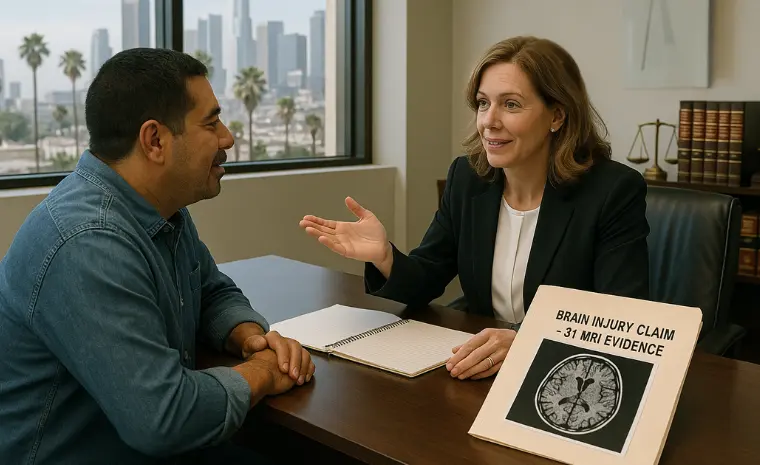
In brain injury claim cases, that level of accuracy is vital for justice and fair compensation. Let’s explore why.
What Makes a 3T MRI Different from 1.5T?
A 3T MRI (3 Tesla magnetic resonance imaging) uses a magnet twice as strong as the common 1.5T scanner. This higher magnetic strength means:
- Crisper images and clearer pictures of the brain
- Shorter scan times for patients
- Ability to detect damage in harder-to-see areas
- Better differentiation of normal and abnormal tissues from the head
According to the National Library of Medicine, 3T MRIs often detect more and smaller lesions, especially in brain regions that are hard to interpret with lower-strength scanners.
Why More Detail Matters for TBI Cases
Traumatic brain injuries can be subtle. Tiny soft tissue or blood vessel lesions may not appear on weaker scans. Yet, these small findings can directly influence patient outcomes and legal outcomes.
For example, a 3T MRI might detect micro-bleeds from a motorcycle accident that a 1.5T scan could miss, leading to more effective treatment and stronger legal evidence. Higher image quality and accurate scans mean your attorney has stronger medical proof to support your brain injury claim.
Key MRI Sequences That Detect Subtle Injuries
Not all brain injuries are obvious on standard scans. Advanced MRI technology with 3T strength allows radiologists to use specialized sequences that reveal changes invisible to the naked eye. This is especially important for patients whose symptoms persist even when routine imaging appears normal.
Some of the most useful 3T MRI sequences for detecting subtle brain injuries include:
- Susceptibility Weighted Imaging (SWI) – Detects tiny bleeds and iron deposits caused by micro-hemorrhages. This is valuable for identifying damage in delicate brain regions.
- Diffusion Tensor Imaging (DTI) – Tracks the pathways of white matter fibers, showing whether connections between brain areas have been disrupted. It can reveal subtle structural damage that affects memory, speech, or coordination.
- FLAIR Sequences – Suppresses signals from cerebrospinal fluid, making it easier to see lesions near fluid-filled spaces that might otherwise be hidden.
- High-Resolution 3D Imaging – Produces a complete, detailed brain model, allowing precise diagnosis and accurate measurement of injury size for better treatment planning.
These techniques work together to provide a more complete picture of brain trauma, giving doctors and attorneys clear, measurable proof that supports both medical care and a strong injury claim.
How 3T MRI Findings Strengthen a Brain Injury Claim
Medical evidence is the backbone of any injury claim. With advanced scanner capabilities, lawyers can show:
- Objective proof of injury
- The correlation between symptoms and physical damage
- The extent of harm for settlement negotiations
For example, the best brain injury lawyers in Los Angeles often work with radiologists specializing in advanced MRI interpretation to ensure no detail is overlooked.
Legal and Medical Context in California
In California personal injury law, magnetic resonance imaging is critical in demonstrating damages. Judges and juries are more likely to award fair compensation when presented with accurate scans showing physical injury.
MRI results can be pivotal in several ways:
- A 3T MRI is a non-invasive test with faster scans and better image quality than older technology.
- Legal teams may reference these scans to challenge insurance companies that dispute the severity of brain trauma.
- Like those around UCLA Medical Center, clinics near major Los Angeles medical centers have advanced MRI machines that produce crisper images and deliver faster results.
Steps to Take if You Suspect a Brain Injury
If you or someone you love has experienced a head injury after an accident:
- Seek emergency medical attention immediately.
- Request a 3T MRI for clearer pictures and more accurate scans.
- Keep all imaging reports and medical records.
- Consult with a Los Angeles attorney who is experienced in brain injury cases.
- Follow up on any recommended treatments for health issues.