
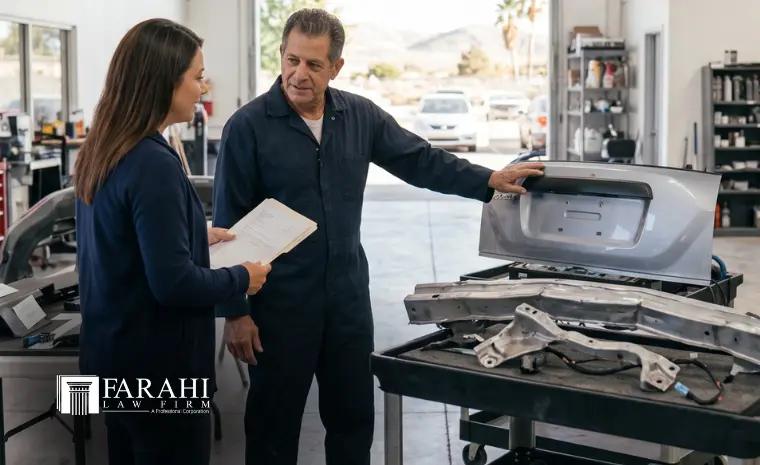
A minor-looking collision can cause problems not visible from the curb. Hidden car damage after an accident may involve structural components, electronics, steering components, or other concealed parts. For California families, missing these problems early can affect repair costs, vehicle safety, and claim value.
This matters after crashes around Lancaster, where traffic on SR-14 and major roads such as Avenue K can involve impact forces that cause damage beyond what is immediately visible. Understanding what to inspect, which records to keep, and when to request a more detailed review can help protect your vehicle and your rights.
Here is what to look for next.
What Is Hidden Vehicle Damage After a Car Accident?
Hidden damage is crash-related harm that a basic visual inspection may miss, such as issues behind bumpers or body panels.
California’s Bureau of Automotive Repair says collision damage can include problems not readily visible until a damaged area is disassembled. A teardown can establish the scope of repair.
The U.S. Department of Transportation reports that in 2025, 36,640 people lost their lives in motor vehicle crashes, with millions more suffering serious injuries annually. A thorough post-collision inspection can help identify problems early and clarify what repairs may be necessary.
Common Types of Hidden Damage Insurance Adjusters May Miss
Common hidden damages include:
- Frame damage or distorted mounting points
- Alignment issues affecting steering or tire wear
- Damage to the suspension system, wheel hubs, or control arms
- Cracked bumper reinforcements
- Wiring, cameras, radar, or sensors tied to safety features
- Electronic faults requiring diagnostic scanning
- Hybrid or EV battery and underbody damage
Professional inspections can add measurements, scans, and a mechanical assessment.
Why Some Accident Damage Is Not Found During the Initial Inspection
An insurer’s first inspection may not reveal the full extent of collision-related damage because some components cannot be assessed without disassembly. Under California repair rules, additional damage discovered during teardown may require a revised estimate and further authorization before repairs proceed.
When newly identified damage affects the scope or cost of repairs, the repair facility can document the findings and submit a supplemental estimate for review. This creates a record that may be important if the insurer questions whether the additional damage was caused by the accident or should be covered under the claim.
How to Document Hidden Damage After an Accident
If you are asking, “How do I find hidden damage after a car accident that the adjuster missed?”, create a record before auto repairs alter the vehicle.
- Take photos or videos of every side, contact points, debris, and roadway conditions.
- Save the original estimate, inspection reports, invoices, towing records, and accident details.
- Ask the auto body shop to photograph newly exposed damage during disassembly.
- Keep insurance company messages about supplements or re-inspections.
- Request written notes explaining why the newly found damage is consistent with the car crash.
For a collision near Antelope Valley Freeway (SR-14) or Lancaster Boulevard in Lancaster, safe-scene photographs can also document lane configuration, roadway conditions, and the point of impact.
Repair Estimates, Teardowns, and Evidence of Additional Damage
California repair rules require an estimate before work begins. When teardown is needed, the repairer must describe the area to be disassembled and the related costs. Afterward, the shop must provide an itemized repair estimate before proceeding.
This can document hidden car damage after an accident using measurements, scan results, and collision repair procedures identified during disassembly.
Vehicle owners may also obtain an independent repair estimate while pursuing an insurance claim.
What to Do When Insurance Disputes Hidden Accident Damage
If the insurer disputes new damage, ask the repairer for photographs, measurements, scan results, and a written explanation linking it to the crash.
You can also:
- Request a re-inspection or supplemental appraisal
- Submit the revised estimate and supporting records
- Compare estimates with the manufacturer’s repair procedures
- Request a written explanation of denied items
California insurers must conduct thorough, fair, and objective claim investigations, with response and claim-decision timelines applying in many situations.
If property issues overlap with personal injury or injury claims, preserve medical records and information about medical treatment. A traumatic brain injury, internal injuries, internal bleeding, or other hidden injuries may exist even when exterior damage looks limited. Seek medical attention from a qualified medical professional when appropriate.
For severe harm or wrongful death, a Lancaster car accident lawyer can assess causation and damages. Personal injury lawyers may explain how repair evidence fits into auto accident claims during a case evaluation.